\みなさま!ありがとうございます!/
オープン以来ご利用者数7,045名突破!(2026.10)




おすすめ観光情報
Discover Osaka Beyond the Tourist Spots: Ride the Historic Hankai Tramway (“Chinden”)
When people think of Osaka, famous attractions like Universal Studios Japan (USJ), Osaka Castle, and Dotonbori usually come to mind.
While these iconic destinations are certainly worth visiting, travelers looking for a more authentic side of the city should consider something different—a journey on the Hankai Tramway, affectionately known by locals as “Chinden.”
The Hankai Tramway is Japan’s oldest operating tram line, connecting downtown Osaka with the historic city of Sakai. Unlike sightseeing trains, it is still used every day by local residents for commuting, shopping, and daily life.
That is exactly what makes it special.
As the tram slowly travels through quiet residential neighborhoods, traditional shopping streets, and historic districts, you’ll experience a side of Osaka that many visitors never see. Instead of simply checking off famous landmarks, you’ll discover the rhythm of everyday life in Japan.
In this guide, we’ll introduce why riding the Hankai Tramway is one of the best ways to experience the authentic culture, history, and local atmosphere of Osaka.
The Hankai Tramway: Connecting Downtown Osaka with Historic Sakai
The Hankai Tramway is the only remaining streetcar line operating in Osaka Prefecture. It runs between Ebisucho Station in Osaka’s lively Shinsekai district and Hamadera-ekimae Station in the historic city of Sakai.
*There is also a route from Tennoji Station to Hamadera Station. Please check the destination before boarding!
For more than 100 years, this tram has been an important part of everyday life for local residents. Unlike tourist attractions designed for visitors, the Hankai Tramway is still used daily by commuters, students, and shoppers.
One of the most charming aspects of the journey is the scenery outside the window. The tram follows part of the historic Old Kishu Highway, passing traditional neighborhoods, local shopping streets, shrines, and historic districts that have preserved the atmosphere of old Osaka and Sakai.
The Hankai Tramway operates two routes:
- Hankai Line
Ebisucho → Shin-Imamiya → Sumiyoshi → Yamato River → Central Sakai → Hamadera-ekimae - Uemachi Line
Tennoji-ekimae → Abeno → Tezukayama → Sumiyoshi
Because it serves local communities rather than tourists, riding the tram offers something many visitors miss—an authentic glimpse into everyday life in Japan.
As the tram moves slowly through residential streets and traditional neighborhoods, you’ll see children walking home from school, local shops opening for the day, and people going about their daily routines. These simple moments create a travel experience that feels genuine and uniquely Japanese.
If you’ve already visited famous attractions like USJ or Osaka Castle, the Hankai Tramway offers a completely different side of Osaka—one that’s quieter, more local, and full of history.
Experience the Authentic Side of Osaka on the “Chinden”
Why Is It Called “Chinden”?
Locals affectionately call the Hankai Tramway “Chinden,” a shortened form of “Chin Chin Densha,” which literally means “ding-ding tram.”
The nickname dates back to the early days of streetcars, when conductors rang a small bell to signal the driver before departure or arrival. The distinctive “chin chin” sound became so familiar that people began referring to the tram itself as the “Chin Chin Densha.”
Even today, many Osaka residents still use the friendly nickname “Chinden,” making it a small but charming piece of local culture that has been passed down through generations.
How to Ride the Hankai Tramway
Although streetcars are relatively rare in Japan today, riding the Hankai Tramway is simple. The system is very similar to boarding a local bus, so even first-time visitors can use it with confidence.
Please note: Fares and operating information may change. Be sure to check the latest information on the Hankai Tramway’s official website before your trip.
1. Wait at the Correct Platform
Trams do not run as frequently as major train lines, so it’s a good idea to check the timetable in advance.
Before boarding, make sure you’re waiting for the tram traveling in the correct direction. The Hankai Tramway operates two different routes, so confirm which line serves your destination before you board.
2. Board Through the Rear Door
Passengers board through the rear (middle) door of the tram.
If you’re using an IC transportation card such as ICOCA, Suica, or PASMO, simply tap your card on the reader as you board.
If you’re paying with cash, just board the tram—there is no numbered ticket to take, because the Hankai Tramway has a flat fare across the entire network.
Adult: ¥240
Child: ¥120
Flat Fare (as of June 11, 2026)
Payment is accepted by cash or Japanese transportation IC cards only. Credit cards, QR code payments, and other electronic payment methods are not accepted.
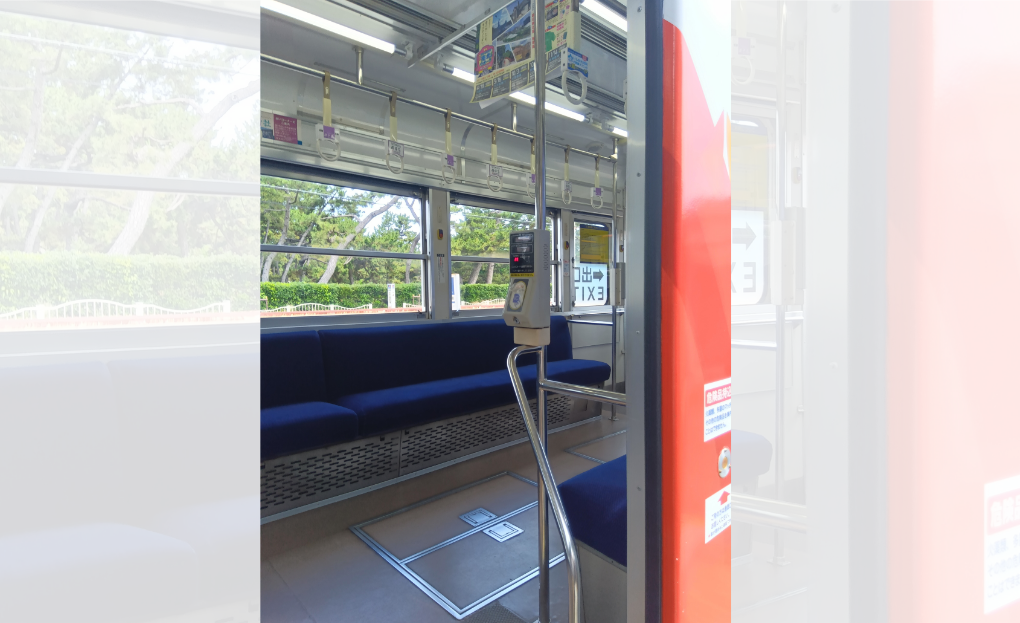
3. Getting Off the Tram
Press the stop button before your stop to let the driver know you’d like to get off.
When the tram arrives, leave through the front door beside the driver.
Safety Tip: Please remain seated until the tram comes to a complete stop. You’ll hear announcements reminding passengers to stay seated to help prevent falls and injuries. Once the tram has stopped, you can take your time and make your way to the front exit beside the driver.
There is a fare machine next to the driver.
If you’re using an IC transportation card, simply tap your card on the reader as you exit.
If you’re paying with cash, place your fare in the cash tray next to the driver before leaving the tram.
Safety Tip: Many tram stops are small and located right next to the roadway. After getting off, watch for passing traffic and avoid stepping directly into the street.
The Best Way to Experience the Hankai Tramway: Start at Hamadera-ekimae Station
If you’re traveling from Kansai International Airport (KIX) toward Osaka, we highly recommend starting your journey on the Hankai Tramway from Hamadera-ekimae Station.
First, take the Nankai Main Line from Kansai Airport Station to Hamadera-koen Station. (If you take an express train, you’ll need to transfer at Sakai Station.)
Just a short walk from Hamadera-koen Station, you’ll find Hamadera-ekimae Station, the starting point of the Hankai Tramway.
Beginning your trip here allows you to enjoy the entire tram journey, making it the perfect way to experience Osaka’s local neighborhoods, historic streets, and everyday life from the very first stop.
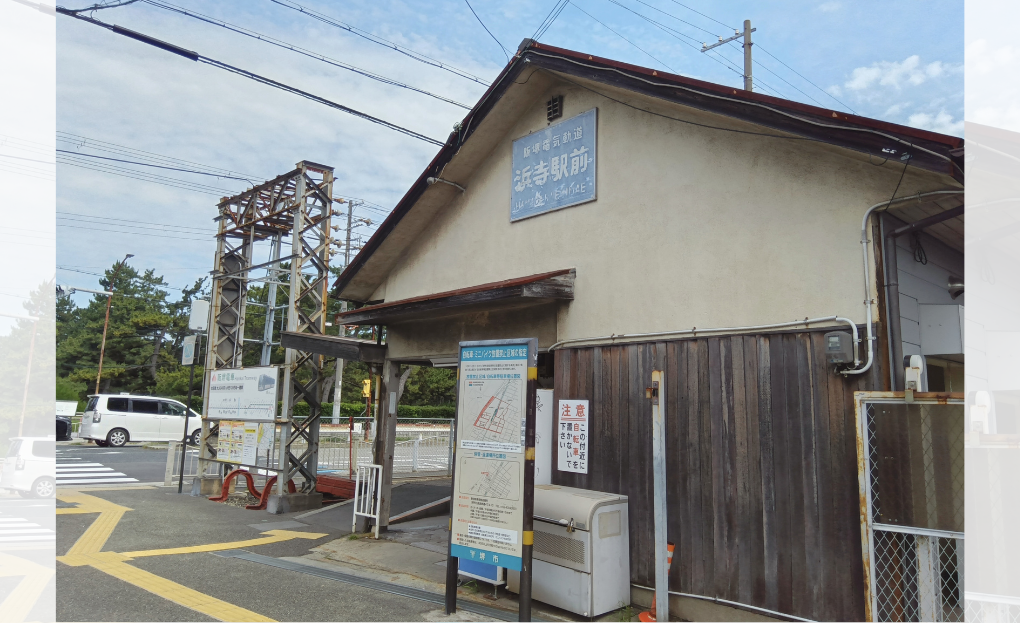
This route is a wonderful way to begin your trip, allowing you to experience both Japan’s rich tea culture and the authentic atmosphere of local Osaka shortly after arriving at the airport.
Rather than simply traveling from one destination to another, the journey itself becomes part of the adventure. Along the Hankai Tramway, you’ll discover historic neighborhoods, cultural landmarks, traditional shops, and hidden local gems that many visitors overlook.
A Must-Visit: Tsuboichi Seicha Honpo Sakai Main Store, a Historic Tea House in Sakai
Founded in 1850, Tsuboichi Seicha Honpo Sakai Main Store is a long-established tea house and one of Sakai’s most popular attractions, preserving the city’s rich tea culture.
The traditional Japanese-style main store features a café where you can enjoy authentic Japanese tea, matcha desserts, and hōjicha sweets.
The shop also offers a wide selection of premium teas, kombucha drinks, and Japanese tea snacks, making it an excellent place to find souvenirs from your trip.
Take the Hankai Tram from Hamadera-ekimae Station and ride for about 11 stops. Get off at Shimmeicho Station.
Once you leave the station, it’s only a short walk to Tsuboichi Seicha Honpo Sakai Main Store.
You can even spot Tsuboichi Seicha Honpo from the station—meow!
Our It’ ta de staff also visited to try their limited-edition summer shaved ice!
→ We’ve shared our visit to Tsuboichi Seicha Honpo Sakai Main Store. Be sure to check it out!
Discover Sakai’s Traditional Crafts Around Tsuboichi Saryo
After enjoying tea and sweets at Tsuboichi Seicha Honpo, take some time to explore the surrounding area. There are many attractions that showcase the unique character of Sakai.
One of the city’s most famous traditions is its knife-making culture.
Sakai is known throughout Japan as one of the country’s leading knife-producing cities, with many specialty knife shops lining the streets.
Here, you can see the high-quality kitchen knives used by professional chefs and experience Japan’s renowned craftsmanship up close.
Tea and knives.
These two traditions together offer a uniquely Sakai experience that reflects the city’s history and culture.
Recommended Hankai Tramway Route for an Authentic Osaka Experience
1. Stay in a Vacation Rental for a More Local Experience
If you want to explore the Hankai Tramway area and discover more of Osaka at a relaxed pace, staying in a nearby vacation rental is a great choice.
Unlike a typical hotel, a vacation rental lets you experience the city like a local, giving you more time to enjoy the neighborhoods, local restaurants, and hidden attractions along the tram line.
- It’ ta de LYCKA(Just a 1-minute walk from Matsudacho Station on the Hankai Tramway)
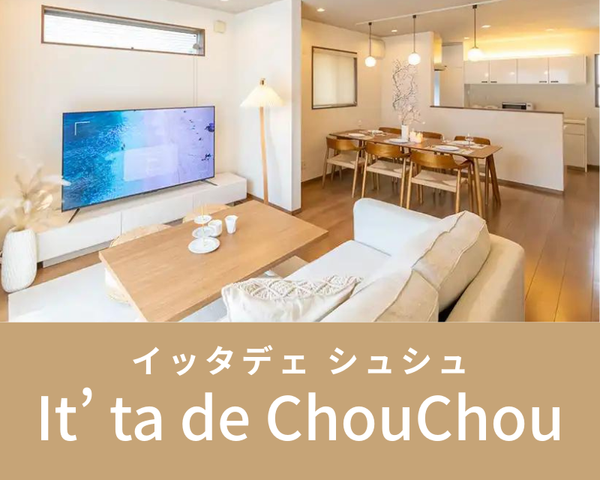
- It’ ta de ChouChou(Just a 10-minute walk from Tennoji-ekimae Station on the Hankai Tramway)
Both properties are conveniently located near the Hankai Tramway, making them an excellent base for sightseeing while exploring Osaka’s local neighborhoods.
Unlike a traditional hotel, staying in a vacation rental allows you to experience the city like a local—living among residential streets, discovering neighborhood cafés and shops, and enjoying a more authentic side of Osaka.

2.Finish Your Journey in Shinsekai for Osaka’s Famous Street Food
Another great option is to take the Hankai Tramway all the way to Shinsekai, one of Osaka’s most iconic neighborhoods.
Here you can explore the famous Tsutenkaku Tower, sample local specialties such as kushikatsu (deep-fried skewers), and wander through the area’s nostalgic streets filled with classic Osaka charm.
After enjoying the local food scene, why not pick up some takeout and relax back at your vacation rental? It’s a great way to end the day while enjoying Osaka’s delicious cuisine at your own pace.
The contrast between the peaceful, historic atmosphere of Sakai and the lively energy of Shinsekai makes this route truly special. In a single day, you can experience both the quiet cultural side and the vibrant, food-loving spirit that make Osaka such a fascinating destination.
3. Explore the Cultural Highlights Along the Hankai Tramway
The city of Sakai, located along the Hankai Tramway, is known for its rich traditions of Japanese tea culture and skilled craftsmanship.
Unlike many famous tourist destinations, Sakai has retained its authentic character. Here, you can wander through historic streets, visit local shops, and experience a slower, more traditional side of Japan that many travelers never get the chance to see.
Discover the Real Osaka on the Hankai Tramway
If you’re looking to make your trip to Osaka truly memorable, hop aboard the Hankai Tramway, affectionately known by locals as the “Chinden.”
More than just a means of transportation, this historic streetcar offers a window into everyday life in Osaka. As it rolls through quiet residential neighborhoods, traditional shopping streets, and historic districts, you’ll experience the city from a local’s perspective—not just as a tourist.
While iconic attractions like Universal Studios Japan, Osaka Castle, and Dotonbori are certainly worth visiting, the Hankai Tramway reveals another side of Osaka—one that’s authentic, relaxed, and deeply connected to the city’s history and culture.
If you’re looking for more than the usual sightseeing experience, take a journey through Sakai on the Hankai Tramway. You may discover that the most memorable part of your trip isn’t a famous landmark, but the everyday moments that make Osaka feel truly alive.